1
Learn
Open the app and follow the relevant lesson.

Why HopeAI Mentorship?
HopeAI combines hands-on projects, coding practice, and mentor guidance to build practical skills, solve real-world problems, and prepare for professional opportunities.
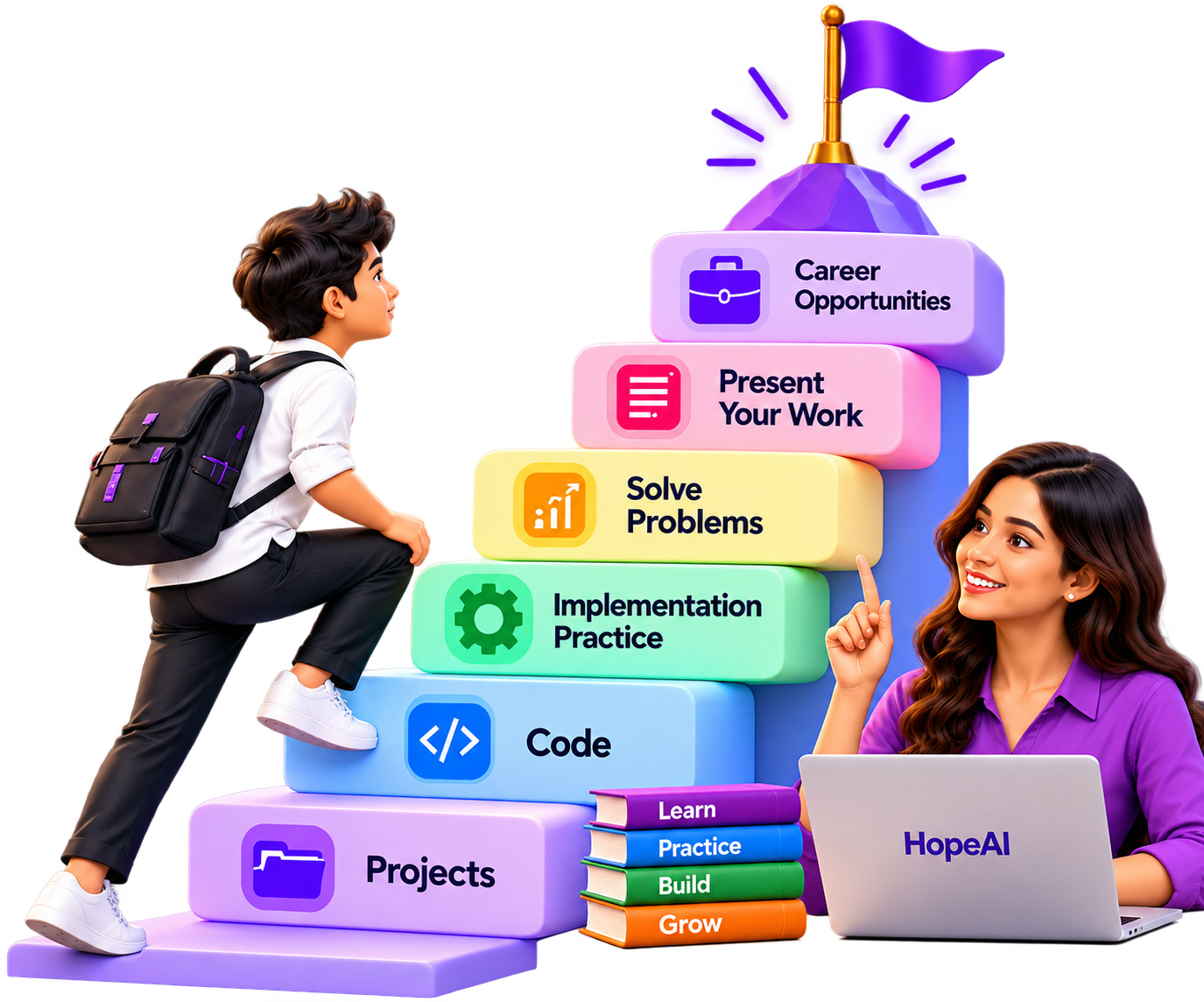
Open the app and follow the relevant lesson.
Complete the coding or implementation activity.
Send your question or error screenshot through WhatsApp.

Work through the explanation with your mentor by message or an arranged call.

Schedule an UltraViewer session if the issue needs remote assistance.

Try the solution and clarify anything you still do not understand.

Learning Psychology

Start with essential laptop skills and clear foundational concepts
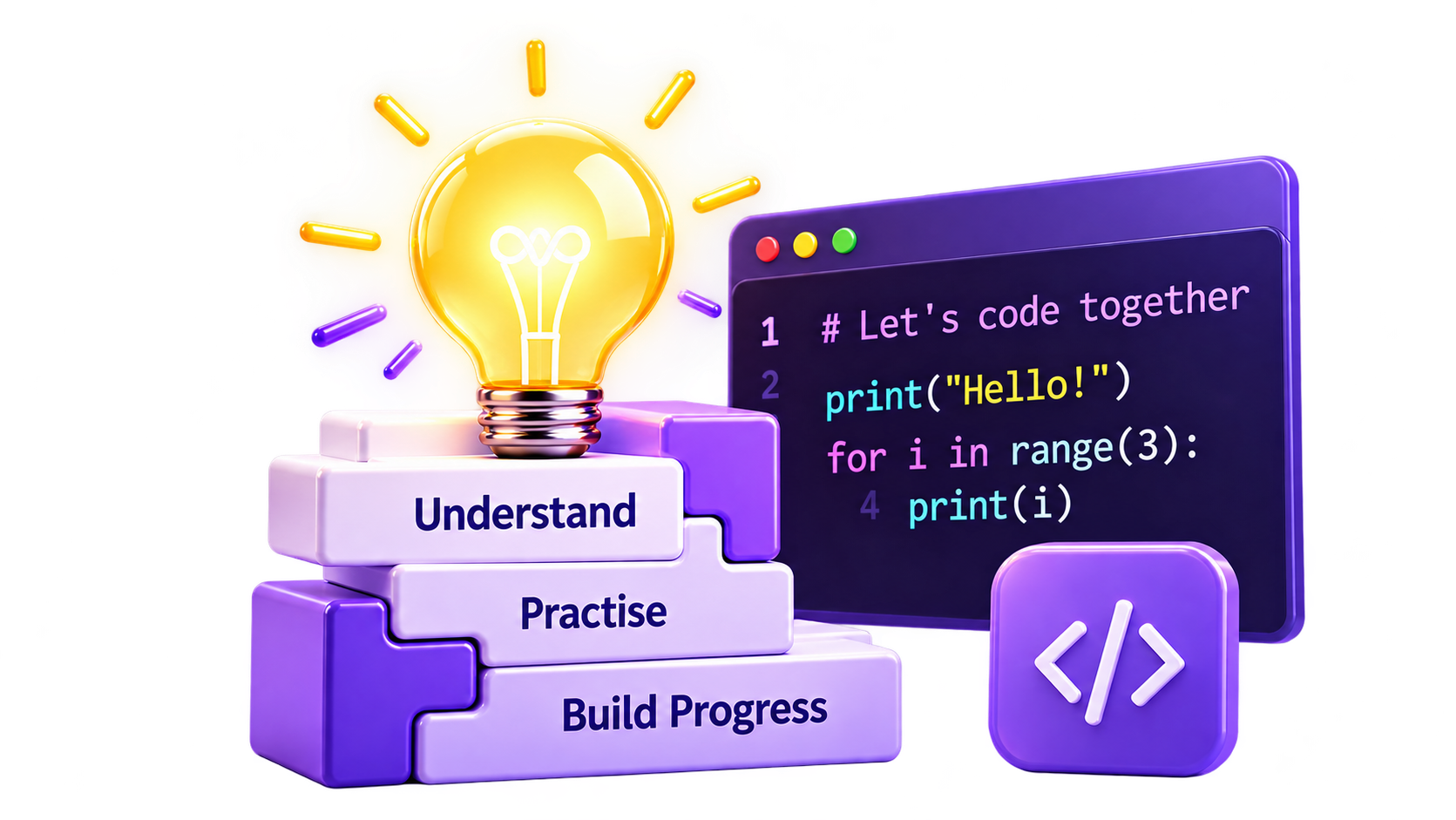
Build understanding through strategic explanation and psychology based approach
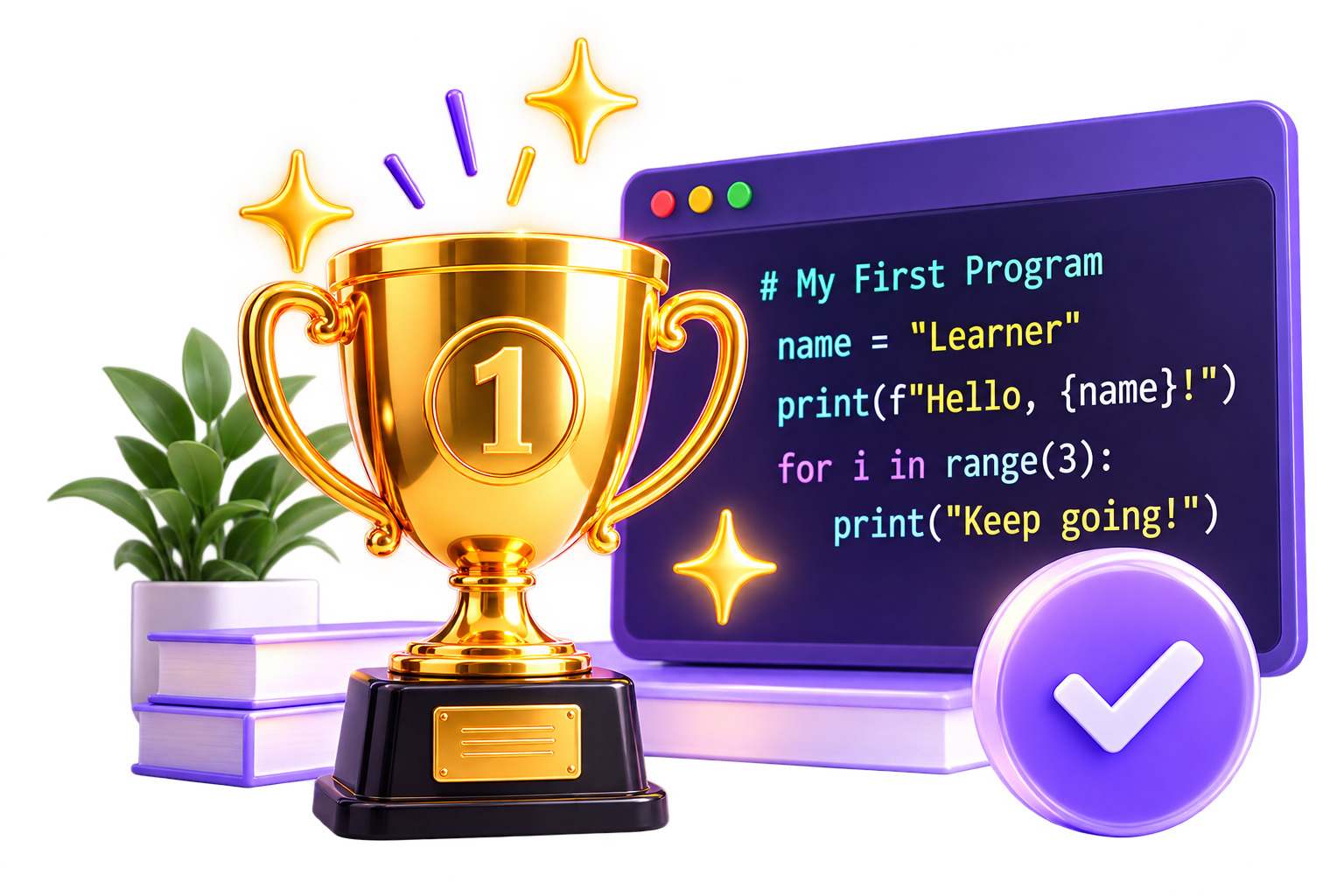
Progress towards writing code independently.
Learner achievements include non-coders writing code and earning first-place competition rankings.
Personalized Guidance for Your Learning Journey

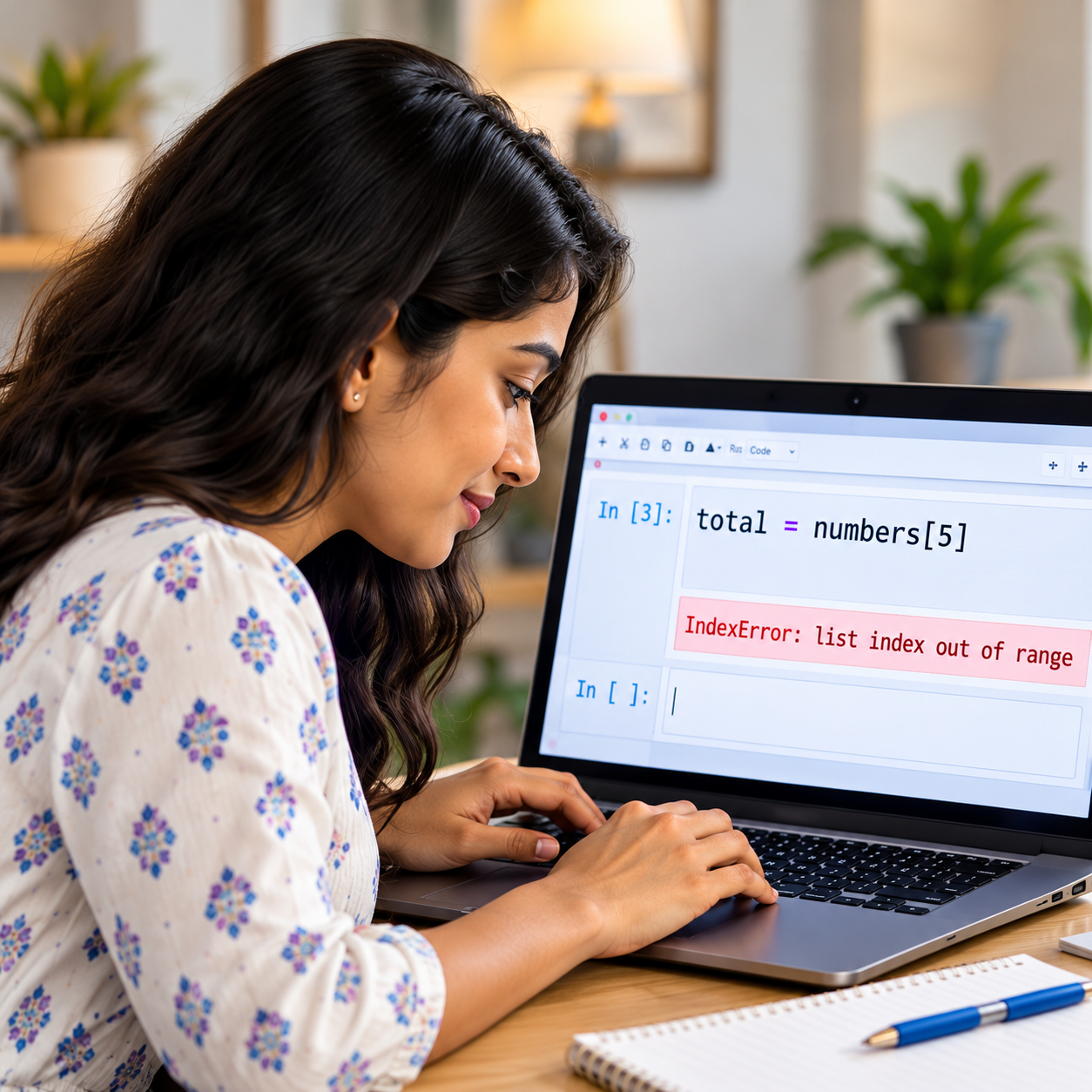
Work through the Python notebook or programming file. Identify the concept, error, or unexpected output you need help understanding.
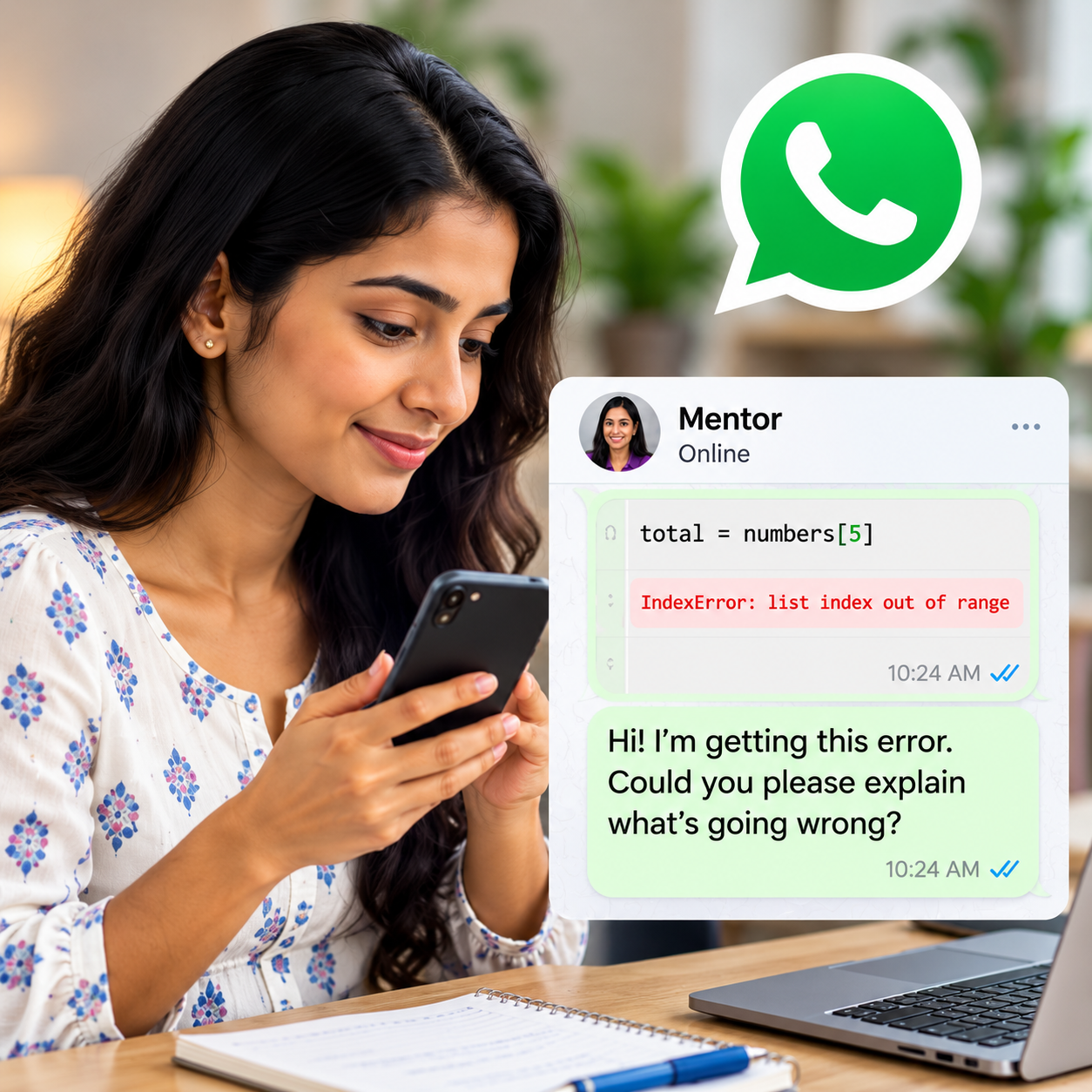
Share your question and relevant screenshots or photos through WhatsApp Request a call when a conversation would help explain the concept.
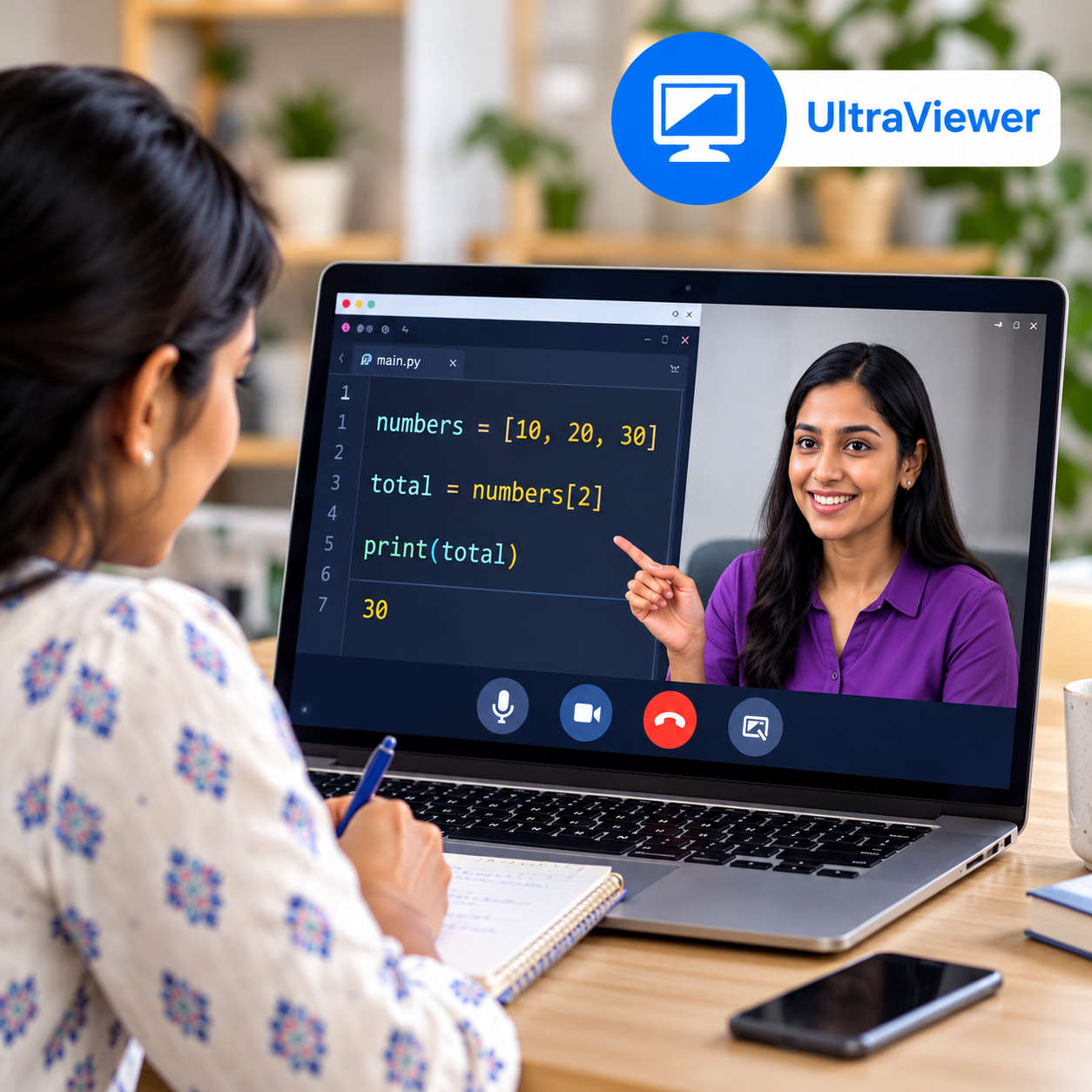
Discuss the issue, apply corrections, and test your understanding. For complex problems, arrange an UltraViewer or GMeet screen-sharing session.

Develop the ability to identify errors, solve similar problems independently, and build your own AI applications.
Focus on concepts, implementation, coding practice, and debugging.

Learn to present your projects, technical abilities, and professional identity.
Prepare a clear, consistent, and professional job-seeker profile.
Combine technical mock interviews with HR interview preparation and feedback.



Learn alongside people who understand your language and learning journey. Join a global Tamil-speaking AI community, exchange project ideas, share experiences, and participate in networking meetings every 15 days.

Build placement-oriented thinking from the beginning of each module - Practise four question patterns throughout your learning journey.

Check definitions, concepts, and technical fundamentals.

Decide which approach fits a real-world problem.
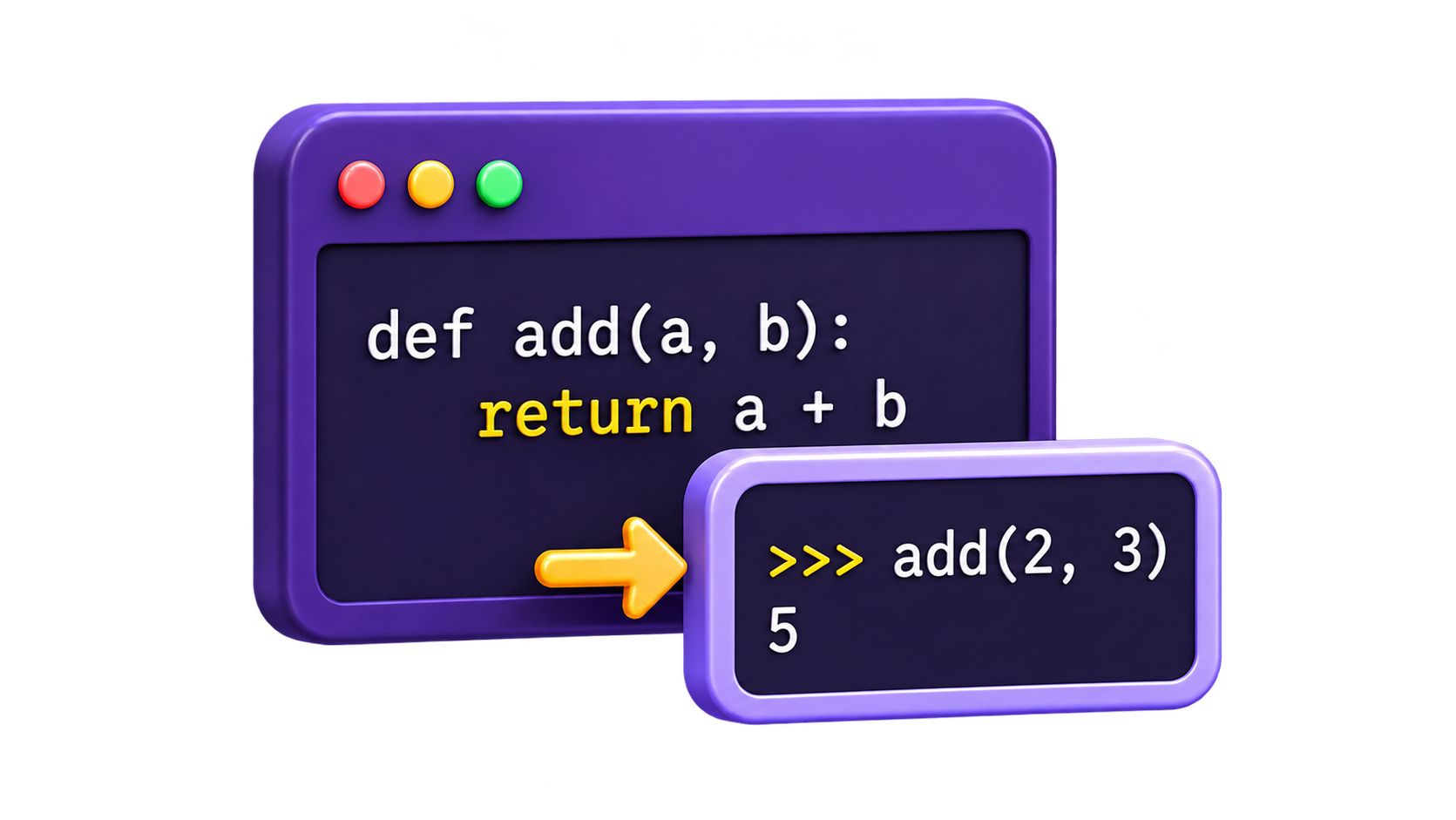
Translate requirements into working code and understand execution.
Diagnose errors, explain their causes, and correct the implementation.


Position the single-mentor model as a strength, emphasizing consistent guidance, personalized attention, and a unified learning experience from fundamentals to advanced concepts.

Highlight the importance of strong foundational learning, similar to an early-years teacher who guides students through the basics before they progress to specialized subjects.
Emphasize the importance of moving beyond theoretical knowledge and certificates to develop practical skills through hands-on implementation and real-world projects.

Differentiate subject matter expertise from effective teaching, highlighting HOPE AI’s focus on simplifying complex concepts, providing clarity, resolving doubts, and enabling learners to build real-world solutions independently.
Yes. The program supports absolute beginners, including learners who need help with basic computer usage. You begin with foundational concepts and progress through clear explanations, guided coding exercises, and practical examples.
Traditional live classes follow a fixed schedule and usually move at the batch’s pace. Hope AI lets you study recorded foundations around your availability and connect with mentors when questions arise during practice. This gives you flexibility to revisit difficult topics while receiving support.
Yes. Recorded lessons allow you to plan your learning around work and personal commitments. You can pause, revise, and continue according to your availability, while coordinating mentor calls or remote troubleshooting sessions when needed.
Send your question, relevant code, or an error screenshot to your mentor through WhatsApp. Your mentor can guide you through messages or an arranged call. For complex technical issues, a scheduled UltraViewer session allows guided remote troubleshooting.
No. You can contact your mentor directly through WhatsApp without raising a ticket or starting an email chain. Share questions when they arise; calls and remote support sessions are coordinated with your mentor as needed.
Every module includes four placement-focused question patterns: MCQs, scenario-based questions, writing code for a specified output, and debugging existing code. These exercises help you strengthen conceptual understanding, apply knowledge, solve problems, and explain your approach. The emphasis is on consistent practice and meaningful improvement.
Yes. Practical implementation is a central part of the learning experience. You apply concepts through coding exercises and project work, with mentor guidance to help you progress towards building AI applications independently.
Share the relevant code, a clear screenshot or copy of the error message, and a short explanation of what you were trying to achieve. This gives your mentor the context needed to guide you towards a solution.
No. Placement-focused question practice is integrated into every module. You begin practising MCQs, scenario-based questions, code-writing tasks, and debugging as you learn, building interview readiness progressively.
The focus is on what you can understand, apply, and explain. Progress means developing the ability to write code, debug errors, build projects, and communicate your approach with increasing independence—not simply completing lessons.
Yes. Mentor support covers both conceptual understanding and technical troubleshooting. You can ask why an approach works, revisit an unfamiliar topic, or request an explanation before continuing your practice.